
Cambridge Park Academy
Assessment and Progress
Assessment Information
At Cambridge Park Academy we fully understand the importance of an effective and consistent range of assessment systems – it is essential that we know how and why our pupils are making progress and also to acknowledge where there may be barriers to progress!
A consistent assessment system benefits both teachers and pupils and draws upon formative and summative strategies. Our teachers are highly skilled at using ‘in the moment’ assessments to establish and act upon misconceptions whilst reflecting on teaching and questioning to inform future learning. Staff are also adept at utilising refined summative assessment systems to check that our intended curriculum sequences are being remembered over time.
We believe assessment is consistent when:
Teachers:
-
- Understand how to apply assessment to the curriculum they’re teaching
- Plan with assessment in mind, which means when they’re planning units of work and lessons, they’re also thinking when and how they're going to assess whether pupils understand the content
- Have secure subject knowledge, so they know how to apply the assessment system to any and all of the subjects they teach
Pupils (where developmentally appropriate)
-
- Understand the criteria that their learning and work is assessed against
- Have clear expectations of assessment
- Know what they should understand and be able to do at the end of a lesson or topic
Our formative models for assessment are varied and fluid but are all underpinned by research-driven evidence such as Rosenshine’s Principles where reviews of prior learning, scaffolding, time, retrieval and small-step learning are all prioritised.
Our summative assessment systems have been developed specifically for our individual pupils needs and vary according to developmental stages. Our Assessment Pathways document offers up a visual of what these assessments may look like across the school.
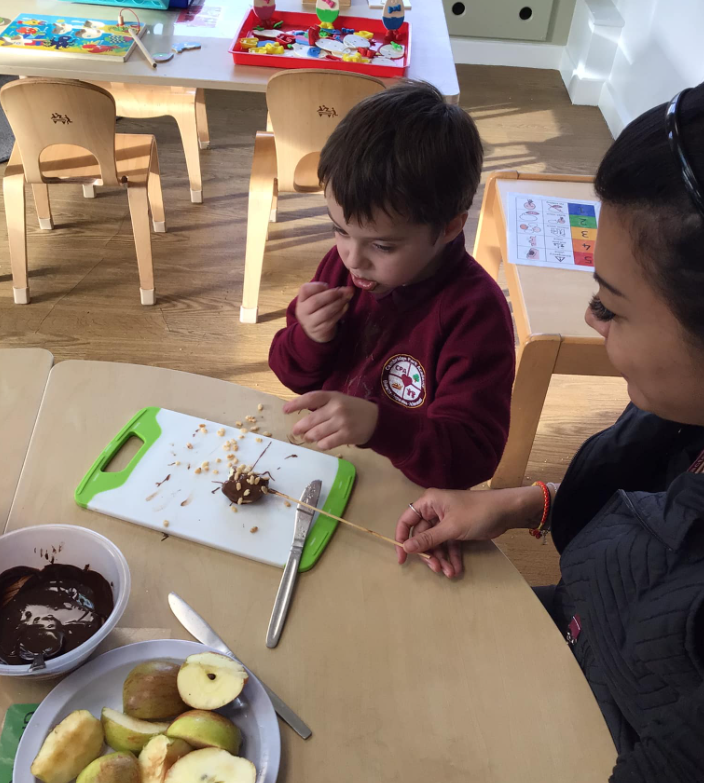
There is no doubt that pupils achieve very well at CPA and but is useful to explore exactly what that achievement looks like!
There is a definition of ‘achievement’ in education that means a combination of progress and attainment, the former is key here within a specialised setting whilst attainment is more broadly aligned to a mainstream model where peer group academic expectations are measured by ‘what stage they have reached’. Conversely, progress is more about ‘how far they have come from their own starting points’ Due to the nature of our pupils complex needs which are underpinned by each pupils EHC Plans, progress is the true measure at CPA.
Personalised Learning Plans (PLPs) and Curriculum Pathways
At CPA, every pupil has a Personalised Learning Plan (PLP) that is reviewed and updated on a termly basis. Each PLP is derived directly from the pupil’s Education, Health and Care Plan (EHCP) outcomes, ensuring that teaching and learning are closely aligned with individual needs and long-term developmental goals. Termly assessments of the PLP inform future targets and serve as a foundation for discussion and planning at the pupil’s Annual Review.
For pupils accessing the Pre Foundation Curriculum, teaching and learning are fully guided by the targets outlined in their PLPs. This approach fosters a highly personalised learning experience, with an emphasis on the development of social communication skills and meaningful engagement. Pupils following this curriculum are typically working within the Engagement Model framework. Nevertheless, subject-specific areas of high interest and strength are thoughtfully incorporated into individual pupil’s learing. Teachers skilfully balance this personalised approach with opportunities for pupils to access the broader staged curriculum where it is developmentally and cognitively appropriate.
Pupils following the Foundations and Functional Curriculum also have termly assessed PLPs. However, for these learners, their personal outcomes are closely interlinked with subject-specific curriculum progression. Evidence collected throughout the academic year is collated and shared during each pupil’s Annual Review, ensuring that parents and carers gain a comprehensive understanding of progress and achievement against individual EHCP outcomes. This process promotes transparency, celebrates success, and supports the ongoing refinement of both teaching strategies and personalised learning targets.
Whilst progress towards targets within plans is key, we are a school (and Trust!) with high ambitions and the ability to track pupils through the actual curriculum is important. In this respect, we have created a number of tools which support us to identify how much progress each pupil is making towards their own personalised targets, but also how much progress they are making through the intended curriculum.
How we track and measure progress at CPA
Pupils in key stages 1, 2, 3 and 4 are assessed at the end of the academic year using our staged approach. The table breaks down the subjects and how many pupils were working at the different stages. This number does not include our Post 16 pupils.
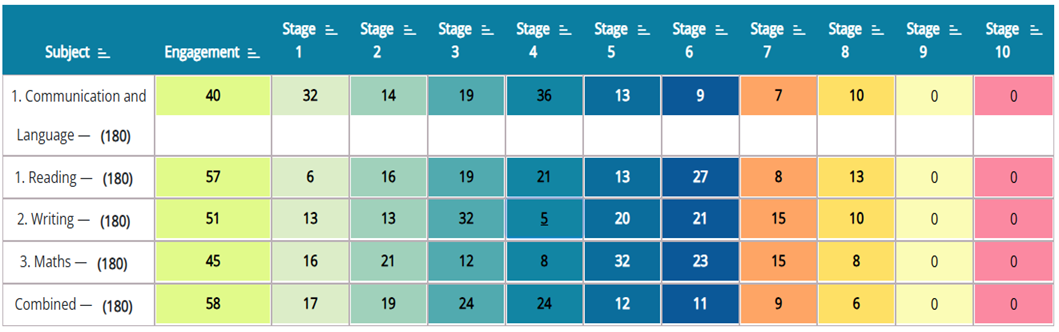
(Example - Summer 2025)
We assess our pupils using the end of year staged approach at the end of the academic year. But throughout the year, we have developed a new assessment system which tracks the pupils individually as they move through the years and pathways at Cambridge Park. Assessing pupils on an individual basis within a developmentally appropriate curriculum ensures that each learner’s unique needs, abilities, and progress are recognised and valued.
At CPA pupils often develop at different rates and may demonstrate understanding in non-traditional ways. Individualised assessment allows teachers to focus on what each child knows and understands, rather than comparing them to age-related expectations that may not reflect their developmental stage.
Pre Foundation's Social Partner Assessment
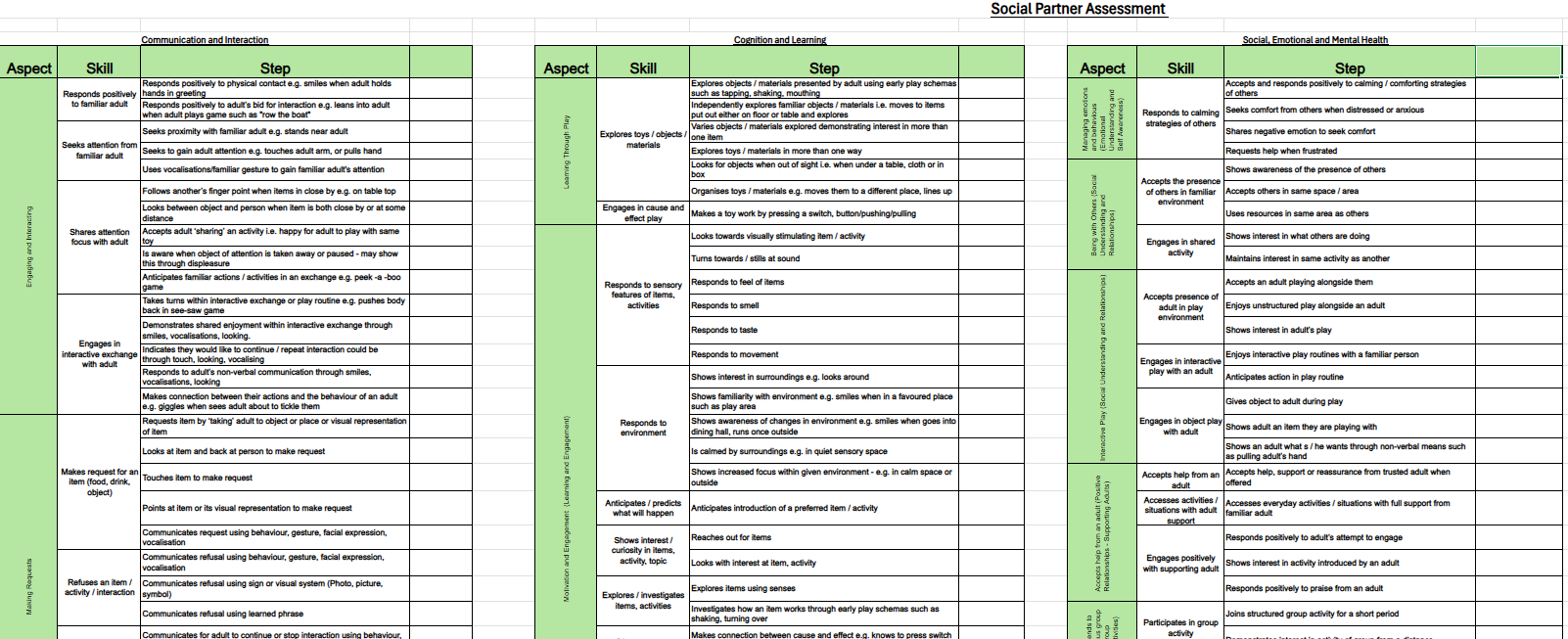
(Example Pre Foundation Tracker)
Pupils who are working on the Pre Foundation curriculum are assessed using the SCERTS social partner statements, which include the 4 areas of need. Teachers assess when a pupil is secure with a statement. The fluidity of our curriculum means pupils are able to fluidly access our staged curriculum when appropriate to their developmental stage.
Foundation’s and Functional’s Assessment
Pupil’s working on the Foundations and Functional curriculums are assessed using our CPA staged approach.
This is broken down into:
- English (Writing, Reading and Oracy)
- Maths
Below are some of the screenshots taken of our new assessment tracking systems to support an understanding of 'what they look like'!
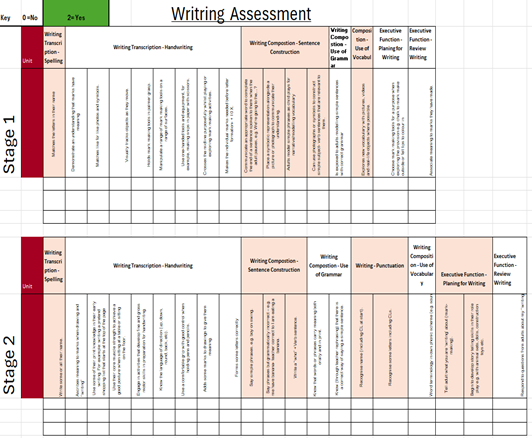
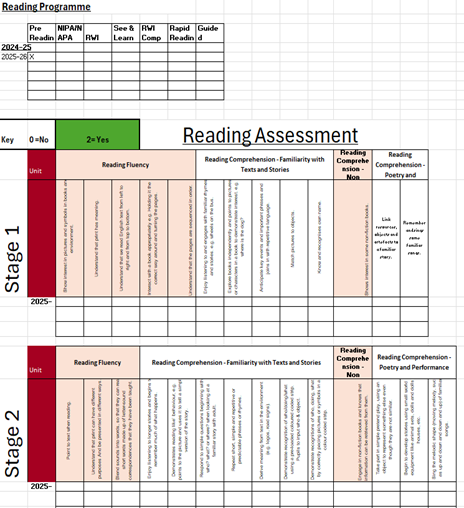
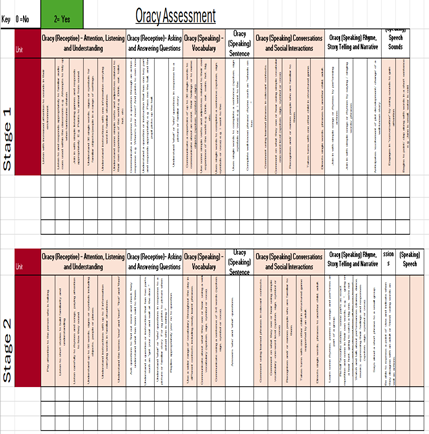
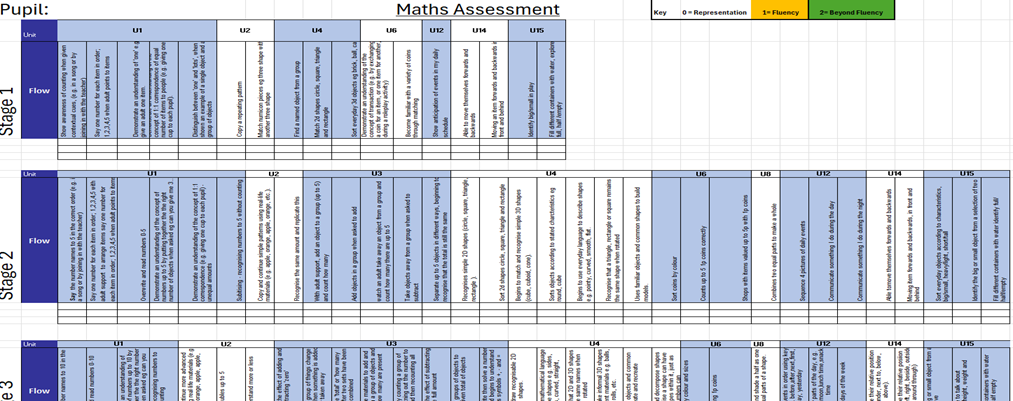
Both English and Maths are assessed using skills-based objectives. These skills are practised and revisited throughout the academic year.
Wider subject specific assessment and tracking:
- Foundations Themes (Stage 1-4)
- Functional Subjects (Stage 4-10)
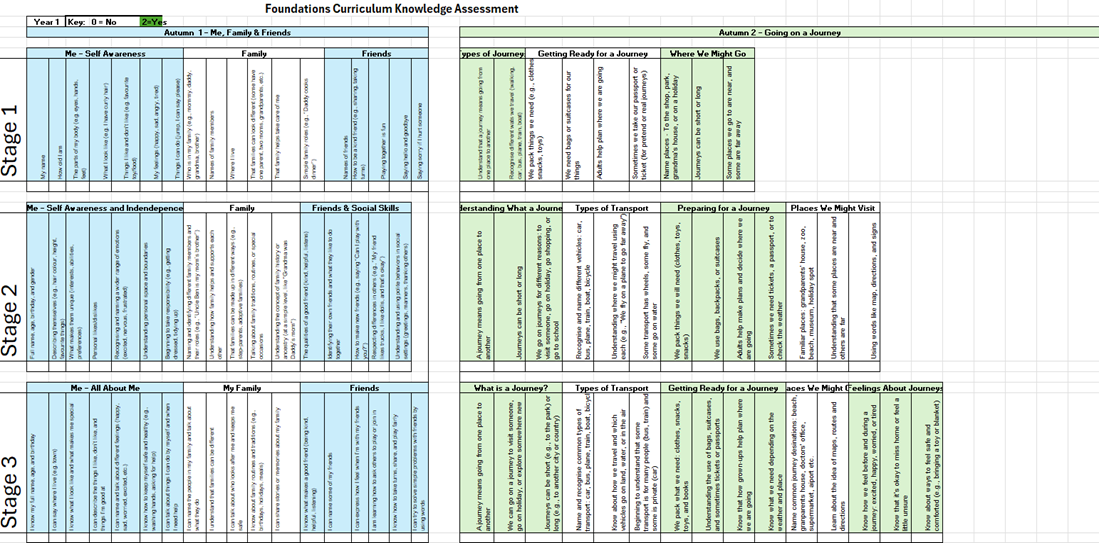
The Foundations themed lessons and Functional subject lessons are assessed using knowledge-based objectives. We have thought extensively on how best to assess pupils at Cambridge Park and decided that a curriculum that prioritises knowledge over skills provides a more equitable framework for assessment. It enables teachers to capture a pupil’s conceptual understanding and long-term learning rather than their ability to perform specific tasks that might be influenced by motor, sensory, or communication challenges. This approach supports a more accurate and holistic picture of learning, promoting self-esteem and engagement by allowing pupils to experience success and progress at their own pace.
Foundation’s Curriculum Example
Functional Curriculum – History Example
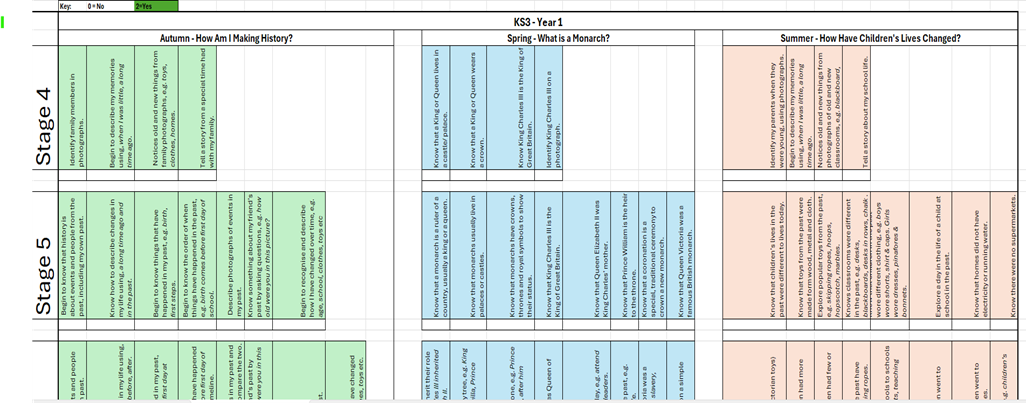
(KS4 also follow the same knowledge-based approach but are assessed against the Entry Level framework.)
The intent of our new assessment system is to track pupils progress throughout their journey at Cambridge Park. Ultimately, any successful assessment system should supply leaders and teachers with individualised, knowledge-focused assessment information which supports meaningful dialogue and progression, informs targeted teaching, and helps to build a secure foundation for lifelong learning!
Cambridge Park Post 16 Assessment Model
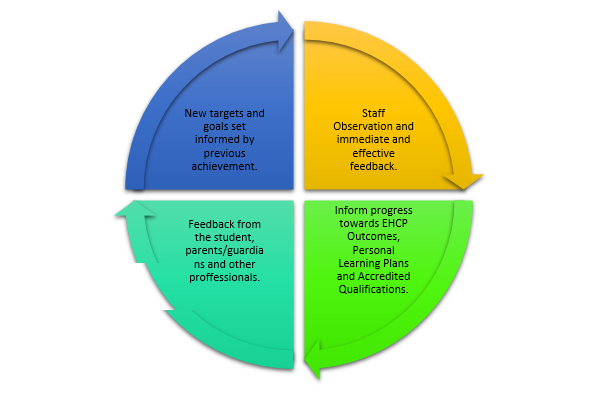
Assessment at our Post 16 Provision is done primarily through staff observations and immediate effective verbal feedback.
Assessment is tailored to the individual student and their specific learning needs. Staff regularly record observations of the student's achievements, progress, and performance against any Personal Learning Plan (PLP) targets, Education, Health and Care Plan (EHCP) outcomes, and accredited qualifications.
This ongoing assessment is done through our digital platform which allows staff to record observations wherever the session might be taking place. This type of assessment is gives us a real sense of the ‘learning journey’ and provides a detailed view of the student's academic progress, as well as their strengths and areas for development.
In addition to this, staff at CPA 6th Form also complete PLP folders with a more reflective view of student's progress
Animal Care is assessed through practical observations and the use of our carefully selected and designed ‘Animal Care Software’.
Learners are observed carrying out practical tasks in the animal care environment and are able to use the software to produce reports that track their progress across the pathway. The software allows learners to input health, enrichment and overall husbandry tasks onto individual animal profiles. The learners input can be individually tracked to see progress made against targeted outcomes listed in both PLP and EHCP outcomes as downloadable reports.
Both Tapestry and Animal Care software allow teachers and Senior Leaders to monitor and establish progress being made. These assessment processes include feedback from the student themselves, their parents or guardians, and other professionals involved in the student's educational journey.
This feedback is then taken into consideration when developing an individualised plan for the student and informing future planning. Additionally, staff document any modifications or accommodations that are needed in order for the student to achieve their goals. This information is used to inform the PLP targets and EHCP goals for each student ensuring that their education continues to be individualised and bespoke.
By continually assessing the student's progress and taking into account feedback from all stakeholders, our Post 16 Provision can ensure that each student is receiving the best possible education.
Assessment, Progress and Reporting
Below is a link to our most recent and up to date Ofsted report and performance data